
The Other Side of God
“One can love God, but must fear him.” -Carl Jung
Can we trust the universe?
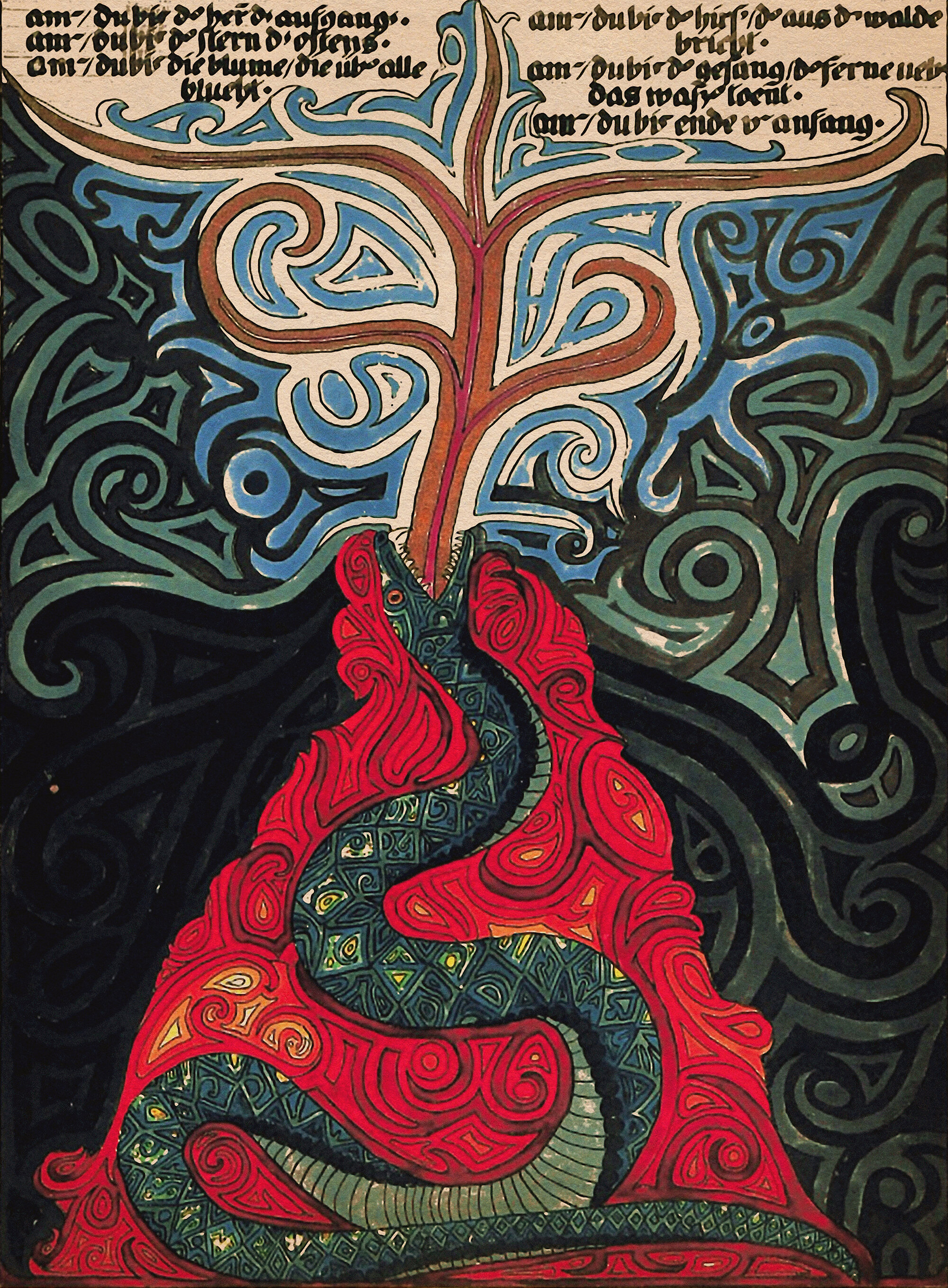
The dominant answer to the problem of Evil in Western thought is that Evil isn't really there. Augustine called it privatio boni—a privation, an absence of Good, with no positive existence of its own. Jung called that doctrine nonsensical, and this talk takes his side.
I gave an oratory to a political theology book club I’m a member of in association with our reading of the Bible’s Book of Job alongside Carl Jung's Answer to Job. I argue that Good and Evil are not human inventions projected onto a neutral cosmos but forces intrinsic to it—that God is both, that Job knew it, and that our refusal to see it is why we project our own worst parts onto scapegoats rather than face them. The consequences run further than theology: it's why destruction does not reliably produce creation, why the worst evils in history announced themselves as the greatest goods, and why "trust the universe" is a much harder sell than it sounds.
Should we go with the flow if the flow is leading to a waterfall with sharp rocks at the bottom? The Tao is not simply the way; the Tao is a spectrum from the right way to the wrong way.
This is an introduction to one of the central arguments of Beyond Within.